Saltar al contenido
231.985 perfiles en la clasificación

William Laud

Reino Unido · En el mapa · Académicos · Vivió de 1573 a 1645 · 71 años

William Laud ( Reading, 7 de octubre de 1573-Londres, 10 de enero de 1645) fue un eclesiástico inglés. Ordenado sacerdote en 1601, fue obispo de St Davids (1621), de Bath and Wells (1626), de Londres (1628), y canciller de Oxford (1630) antes de ser consagrado arzobispo de Canterbury en 1633.

Texto de Wikipedia, CC BY-SA 4.0

William Laud: unas 161 lecturas al día, en 32 idiomas.

Un día típico de los 30 días hasta el 19 de noviembre de 2026

El valor central de los días contados, para que una semana de noticias no pueda alterarlo. La línea de abajo muestra los últimos 121 días, un punto por día.

¿Hay algún error?
Comparar

Una vida en fechas

1645Fallecimiento10 de enero de 16451639“I have been informed that some masters come to St. Mary's, and stand or sit there bare in sermon time, not out of any devotion, but only to hide their hats...”En sus palabras4 de octubre de 1639Letter to the vice-chancellor of Oxford University (4 de octubre de 1639), quoted in The Works of the Most Reverend Father in God, William Laud,

“No man can set a better state of the question between Scripture and tradition, than Hooker doth.”En sus palabrasA Relation of the Conference betweene William Lawd...and Mr. Fisher the Jesuite (1639), quoted in The Works of the Most Reverend Father in

1638“Mr. Alex. Henderson, who went all this while for a quiet and well-spirited man, hath showed himself a most violent and passionate man, and a Moderator without moderation.”En sus palabras3 de diciembre de 1638Letter to the Marquis of Hamilton (3 de diciembre de 1638), quoted in The Works of the Most Reverend Father in God, William Laud, sometime Lord

1637“It is versus altare, 'towards His altar', as the greatest place of God's residence upon earth.”En sus palabras16 de junio de 1637Speech in the Star Chamber at the censure of John Bastwick, Henry Burton and William Prynne (16 de junio de 1637), quoted in The Works of the Most

1633“I had a serious offer made me again to be a Cardinal. ... But my answer again was, that something dwelt within me which would not suffer that, till Rome were other than it is.”En sus palabras17 de agosto de 1633Diary (17 de agosto de 1633), quoted in The Works of the Most Reverend Father in God, William Laud, sometime Lord Archbishop of Canterbury.

1625“The King is God's immediate lieutenant upon earth; and therefore one and the same action is God's by ordinance, and the King's by execution.”En sus palabras19 de junio de 1625Sermon preached at Whitehall (19 de junio de 1625), quoted in The Works of the Most Reverend Father in God, William Laud, sometime Lord Archbishop

1573Nacimiento7 de octubre de 1573

Multimedia y música

Fotos 8

En sus propias palabras 4
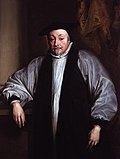
,
William Laud
,
4 declaraciones, las más recientes primero
  1. Wednesday, Coronation-day, King Charles took his journey northward, against the Scottish covenanting rebels. God of His infinite mercy bless him with health and success.

    27 de marzo de 1639 · Diary (27 de marzo de 1639), quoted in The Works of the Most Reverend Father in God, William Laud, sometime Lord Archbishop of Canterbury. Volume, En sus palabras

  2. The tumults in Scotland, about the Service-Book offered to be brought in, began Julii 23, 1637, and continued increasing by fits, and hath now brought that kingdom in danger.

    29 de abril de 1638 · Diary (29 de abril de 1638), quoted in The Works of the Most Reverend Father in God, William Laud, sometime Lord Archbishop of Canterbury. Volume, En sus palabras

  3. I know the Jesuits are very cunning at these tricks; but if you have no more hold of your printers, than that the press must lie thus open to their corruption.

    15 de septiembre de 1637 · Letter to William Chillingworth (15 de septiembre de 1637), quoted in The Works of the Most Reverend Father in God, William Laud, sometime Lord, En sus palabras

Wikiquote, CC BY-SA 4.0

Acerca de esta persona

Fue encarcelado en la Torre de Londres y posteriormente decapitado, como parte de la guerra civil inglesa por su apoyo al rey Carlos I de Inglaterra y su apoyo, de un modo similar al que hicieran los católicos, al libre albedrío contra la predestinación calvinista del puritanismo en la Iglesia de Inglaterra o anglicana.

Texto de Wikipedia, CC BY-SA 4.0
País
Reino Unido
Categoría
Académicos
Tipo
Mundo académico
Estado
Persona fallecida
Fechas
Vivió de 1573 a 1645 · 71 años