Saltar al contenido
232.514 perfiles en la clasificación

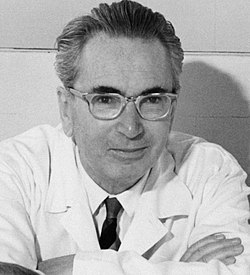
Viktor Frankl

Austria · En el mapa · Médicos · Vivió de 1905 a 1997 · 92 años

Viktor Emil Frankl (Viena, 26 de marzo de 1905-2 de septiembre de 1997), conocido como Viktor Frankl, fue un neurólogo, psiquiatra y filósofo austríaco, fundador de la logoterapia, una de las formas del análisis existencial.

Texto de Wikipedia, CC BY-SA 4.0

Viktor Frankl: unas 2923 lecturas al día, en 59 idiomas.

Un día típico de los 30 días hasta el 20 de noviembre de 2026

El valor central de los días contados, para que una semana de noticias no pueda alterarlo. La línea de abajo muestra los últimos 400 días, un punto por día.

¿Hay algún error?
Comparar

Una vida en fechas

1997Fallecimiento2 de septiembre de 1997“It is true, Logotherapy, deals with the Logos; it deals with Meaning. Specifically I see Logotherapy in helping others to see meaning in life.”En sus palabrasMan's Search for Ultimate Meaning (1997)

1992“An abnormal reaction to an abnormal situation is normal behavior. p. 32 in the 1992 edition, , Beacon Press”En sus palabrasOriginally published as Trotzdem Ja Zum Leben Sagen : Ein Psychologe erlebt das Konzentrationslager [Nevertheless, Say "Yes" to Life: A

1984“There is nothing in the world, I venture to say, that would so effectively help one to survive even the worst conditions, as the knowledge that there is a meaning in one’s life.”En sus palabrasp. 126 in the 1984 Pocket Books edition

1981Condecoración Austriaca de las Ciencias y las ArtesPremio1959“If there is a meaning in life at all, then there must be a meaning in suffering. Suffering is an ineradicable part of life, even as fate and death.”En sus palabrasp. 67 in the 1959 Beacon Press edition

1946“A thought transfixed me: for the first time in my life I saw the truth as it is set into song by so many poets, proclaimed as the final wisdom by so many thinkers.”En sus palabrasOriginally published as Trotzdem Ja Zum Leben Sagen : Ein Psychologe erlebt das Konzentrationslager [Nevertheless, Say "Yes" to Life: A

“Ultimately, man should not ask what the meaning of his life is, but rather must recognize that it is he who is asked.”En sus palabrasOriginally published as Trotzdem Ja Zum Leben Sagen : Ein Psychologe erlebt das Konzentrationslager [Nevertheless, Say "Yes" to Life: A

1905Nacimiento26 de marzo de 1905

En torno a Viktor

Multimedia y música

Fotos 8

En sus propias palabras 2

,
Viktor Frankl
,
2 declaraciones, las más recientes primero
  1. You may of course ask whether we really need to refer to "saints." Wouldn't it suffice just to refer to decent people? It is true that they form a minority.

    1984 · Postscript 1984 : The Case for a Tragic Optimism, based on a lecture at the Third World Congress of Logotherapy, Regensburg University (19, En sus palabras

  2. What man actually needs is not a tensionless state but rather the striving and struggling for some goal worthy of him.

    1946 · Originally published as Trotzdem Ja Zum Leben Sagen : Ein Psychologe erlebt das Konzentrationslager [Nevertheless, Say "Yes" to Life: A, En sus palabras

Wikiquote, CC BY-SA 4.0

Premios

Condecoración Austriaca de las Ciencias y las Artes1981
Anillo de Honor de la ciudad de Viena
Gran Cruz del Mérito con Estrella de la Orden del Mérito de la República Federal de Alemania
Doctor honoris causa por la Universidad de Viena
Doctor honoris causa por la Universidad Católica de Lublin
Doctor honoris causa por la Universidad Carolina de Praga

Acerca de esta persona

Sobrevivió desde 1942 hasta 1945 en cuatro campos de concentración nazis: Theresienstadt, Kaufering, Turkheim y Auschwitz. A partir de esa experiencia, escribió el libro best seller El hombre en busca de sentido (1946).

Texto de Wikipedia, CC BY-SA 4.0

País
Austria
Categoría
Médicos
Tipo
Medicina
Estado
Persona fallecida
Fechas
Vivió de 1905 a 1997 · 92 años