Paul Dirac
Reino Unido · En el mapa · Científicos · Vivió de 1902 a 1984 · 82 años
Paul Adrien Maurice Dirac (Brístol, 8 de agosto de 1902-Tallahassee, 20 de octubre de 1984) fue un físico teórico y matemático británico que contribuyó de forma fundamental al desarrollo de la mecánica cuántica y la electrodinámica cuántica.
Texto de Wikipedia, CC BY-SA 4.0
Paul Dirac: unas 1402 lecturas al día, en 103 idiomas.
Un día típico de los 30 días hasta el 19 de noviembre de 2026
El valor central de los días contados, para que una semana de noticias no pueda alterarlo. La línea de abajo muestra los últimos 400 días, un punto por día.
¿Hay algún error?Una vida en fechas
En torno a Paul

 J. Robert Oppenheimer Se formó con Paul
 Roger Penrose Se formó con Paul
 Dennis W. Sciama Se formó con Paul
 Ralph H. Fowler Enseñó a Paul
 Paul Weiss Se formó con Paul
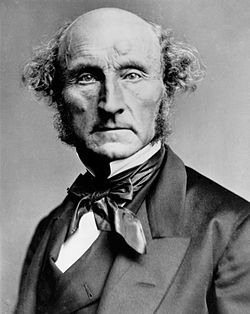 John Stuart Mill Influyó en Paul
 Abdus Salam Recibió la influencia de Paul
 Stephen Hawking Recibió la influencia de Paul
 Richard Feynman Recibió la influencia de Paul
- Robert H. Dicke Recibió la influencia de Paul
- Cyril Domb Recibió la influencia de Paul
 Paul Dirac
Parejas
¿Está toda la familia?
Solo aparecen los familiares que tienen un perfil aquí, así que una familia puede ser más grande. Una línea también puede ser errónea. Un matrimonio solo aparece como terminado si consta su fin, así que un cónyuge que aparece aquí puede ser un excónyuge.
Corregir esta familiaMultimedia y música
Fotos 8


En sus propias palabras 4
, It was a good description to say that it was a game, a very interesting game one could play. Whenever one solved one of the little problems, one could write a paper about it.
The measure of greatness in a scientific idea is the extent to which it stimulates thought and opens up new lines of research.
In science one tries to tell people, in such a way as to be understood by everyone, something that no one ever knew before. But in the case of poetry, it's the exact opposite!
Premios
Acerca de esta persona
Ocupó la Cátedra Lucasiana de matemáticas de la Universidad de Cambridge, si bien pasó los últimos diez años de su vida en la Universidad Estatal de Florida. Entre otros descubrimientos formuló la ecuación de Dirac que describe el comportamiento de los fermiones y con la cual predijo la existencia de la antimateria. Dirac compartió el Premio Nobel de física de 1933 con Erwin Schrödinger, «por el descubrimiento de nuevas formas productivas de la teoría atómica».
Texto de Wikipedia, CC BY-SA 4.0