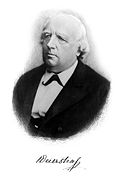
Max Müller
Alemania · En el mapa · Académicos · Vivió de 1823 a 1900 · 76 años
Friedrich Max Müller (6 de diciembre de 1823-28 de octubre de 1900) fue un filólogo alemán nacido en la Confederación Alemana y orientalista, que vivió y estudió en Gran Bretaña durante la mayor parte de su vida.
Texto de Wikipedia, CC BY-SA 4.0
Max Müller: unas 268 lecturas al día, en 51 idiomas.
Un día típico de los 30 días hasta el 19 de noviembre de 2026
El valor central de los días contados, para que una semana de noticias no pueda alterarlo. La línea de abajo muestra los últimos 400 días, un punto por día.
¿Hay algún error?Una vida en fechas
En torno a Max


Padres

 Max Müller
Parejas
Hijos

¿Está toda la familia?
Solo aparecen los familiares que tienen un perfil aquí, así que una familia puede ser más grande. Una línea también puede ser errónea. Un matrimonio solo aparece como terminado si consta su fin, así que un cónyuge que aparece aquí puede ser un excónyuge.
Corregir esta familiaMultimedia y música
Fotos 2


En sus propias palabras 5
, There was a time when the ancestors of the Celts. the Germans, the Slavonians. the Greeks and Italians, the Persians and the Hindus. were living together beneath the same roof.
The translation of the Veda will hereafter tell to a great extent on the fate of India and on the growth of millions of souls in that country.
We all come from the East - all that we value most has come to us from the East, and in going to the East...
Premios
Acerca de esta persona
Fue uno de los fundadores de las disciplinas académicas occidentales de estudios indios y estudios religiosos (ciencia de la religión, alemán: Religionswissenschaft). Müller escribió importantes trabajos académicos y de divulgación en materia de indología. Los Libros Sagrados de Oriente, un conjunto de 50 volúmenes de traducciones al inglés, se preparó bajo su dirección. También promovió la idea de una familia de idiomas. En lo que se refiere a la cultura hispánica, fue célebre defensor de la obra de Lorenzo Hervás frente al aprovechamiento que sufrió por parte de Wilhelm von Humboldt.
Texto de Wikipedia, CC BY-SA 4.0