Saltar al contenido
232.815 perfiles en la clasificación

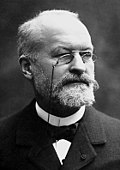
Albert Schweitzer

Francia · En el mapa · Médicos · Vivió de 1875 a 1965 · 90 años

Ludwig Philipp Albert Schweitzer OM (Kaysersberg, Alsacia, Imperio Alemán, 14 de enero de 1875 - Lambaréné, Moyen-Ogooué, Gabón, 4 de septiembre de 1965) fue un médico, filósofo, teólogo y músico franco-alemán, con ciudadanía inicialmente alemana y después francesa (tras la incorporación de Alsacia a la República...

Texto de Wikipedia, CC BY-SA 4.0

Albert Schweitzer: unas 1488 lecturas al día, en 84 idiomas.

Un día típico de los 30 días hasta el 21 de noviembre de 2026

El valor central de los días contados, para que una semana de noticias no pueda alterarlo. La línea de abajo muestra los últimos 400 días, un punto por día.

¿Hay algún error?
Comparar

Una vida en fechas

1965Fallecimiento4 de septiembre de 19651961“Any religion or philosophy which is not based on a respect for life is not a true religion or philosophy.”En sus palabrasLetter to a Japanese Animal Welfare Society (1961); also in The Words of Albert Schweitzer (1984) edited by ‎Norman Cousins, p. 37

1959Premio SonningPremio1956“Truth has no special time of its own. Its hour is now - always, and indeed then most truly when it seems most unsuitable to actual circumstances.”En sus palabrasCh. XI : Conclusion (1956 edition)

1954Orden del Mérito de las Ciencias y las ArtesPremio1952Premio Nobel de la PazPremio1951Premio de la Paz del Comercio Librero AlemánPremio1950Gran Oficial de la Orden Nacional de la Legión de HonorPremioOficial de la Orden Nacional de la Legión de HonorPremio1948Caballero de la Orden Nacional de la Legión de HonorPremio1932Medalla Goethe de la ciudad de FráncfortPremio1928Premio GoethePremio1924“A word in conclusion about the relations between the whites and blacks. What must be the general character of the intercourse between them?”En sus palabrasCh. VII, Social Problems in the Forest, p. 130 (1924 translation by Ch. Th. Campion); Schweitzer later repudiated such statements, saying

1913“Modern Christianity must always reckon with the possibility of having to abandon the historical figure of Jesus.”En sus palabrasThe Quest of the Historical Jesus 2nd edition (1913), as translated by John Bowden et al. (2001)

1906“This dogma had first to be shattered before men could once more go out in quest of the historical Jesus, before they could even grasp the thought of His existence.”En sus palabrasp. 3

“The historical Jesus will be to our time a stranger and an enigma. The study of the Life of Jesus has had a curious history.”En sus palabrasp. 397

1875Nacimiento14 de enero de 1875

En torno a Albert

Multimedia y música

Fotos 8

En sus propias palabras 4

,
Albert Schweitzer
,
4 declaraciones, las más recientes primero
  1. The awareness that we are all human beings together has become lost in war and through politics.

    30 de marzo de 1958 · Radio appeal for peace, Oslo, Norway (30 de marzo de 1958); also in Peace or Atomic War (1958) Three Appeals Broadcast from Oslo, Norway, on, En sus palabras

  2. Let me give you a definition of ethics: It is good to maintain and further life - it is bad to damage and destroy life.

    1947 · As quoted in Albert Schweitzer : The Man and His Mind (1947) by George Seaver, p. 366, En sus palabras

  3. Thus each successive epoch of theology found its own thoughts in Jesus; that was, indeed, the only way in which it could make Him live.

    1906 · p. 4, En sus palabras

Wikiquote, CC BY-SA 4.0

Premios

Premio Sonning1959
Orden del Mérito de las Ciencias y las Artes1954
Premio Nobel de la Paz1952
Premio de la Paz del Comercio Librero Alemán1951
Oficial de la Orden Nacional de la Legión de Honor1950
Gran Oficial de la Orden Nacional de la Legión de Honor1950
Caballero de la Orden Nacional de la Legión de Honor1948
Medalla Goethe de la ciudad de Fráncfort1932
Premio Goethe1928
Pour le Mérite
Medalla Goethe de Arte y Ciencia

Acerca de esta persona

Ludwig Philipp Albert Schweitzer OM (Kaysersberg, Alsacia, Imperio Alemán, 14 de enero de 1875 - Lambaréné, Moyen-Ogooué, Gabón, 4 de septiembre de 1965) fue un médico, filósofo, teólogo y músico franco-alemán, con ciudadanía inicialmente alemana y después francesa (tras la incorporación de Alsacia a la República francesa), misionero médico en África y Premio Nobel de la Paz en 1952, también conocido por su vida interpretativa de Jesús y su profundo conocimiento de los textos bíblicos. Schweitzer, desafió tanto la visión secular de Jesús representado por la metodología histórico-crítica de su época en ciertos círculos académicos, así como la visión tradicional cristiana. Él presentaba a Jesús como alguien que, literalmente, creía que el fin del mundo estaba llegando en su propia vida y se creía a sí mismo como un salvador.

Texto de Wikipedia, CC BY-SA 4.0

País
Francia
Categoría
Médicos
Tipo
Medicina
Estado
Persona fallecida
Fechas
Vivió de 1875 a 1965 · 90 años

En internet